Colorful Teacup Stack: A Designer’s Stitch Review
When evaluating a new machine embroidery design for my studio, I look beyond the digital preview. I need to know how the artwork translates from screen to fabric, especially for clients who demand professional results. The Colorful Teacup Stack with Floral Charm immediately caught my eye as a potential staple for Kitchen Cooking themed projects. However, as an experienced reviewer and maker, I approach every embroidery file with a critical eye toward stitch density, registration, and commercial viability. This review breaks down my practical assessment of this design before you commit it to your next embroidery project.
First Impressions and Visual Personality
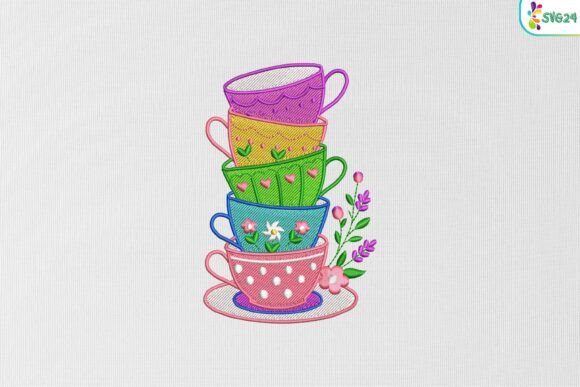
My initial reaction to the Colorful Teacup Stack with Floral Charm was positive regarding its composition. The vertical stacking creates a natural focal point that works exceptionally well on narrow or tall canvases like tea towels and tote bag panels. The floral accents provide necessary organic softness to balance the geometric rigidity of the stacked cups. For an Etsy seller or boutique owner, this whimsical yet structured aesthetic bridges the gap between vintage nostalgia and modern cottagecore trends.
Visually, the design suggests a mix of fill stitch areas for the cup bodies and likely satin stitch elements for the floral details and rims. This combination is crucial for maintaining visual interest without creating a bulletproof patch of thread. The charm lies in the color blocking; however, this also means the design relies heavily on accurate thread colors to achieve the intended playful mood. If stitched in monochrome or low-contrast threads, the separation between stacked elements might get lost, diminishing the overall impact.
Real-World Application: The Custom Tea Towel Test
To truly evaluate this asset, I mentally placed it in a real-life scenario: creating a premium linen tea towel set for a wedding gift. In this context, the Colorful Teacup Stack with Floral Charm serves as more than just decoration; it acts as a branding element for the couple's new home. Linen presents specific challenges due to its loose weave and texture. A design with too much open space risks getting swallowed by the fabric texture, while excessive density can cause puckering.
For this application, I would assess whether the design includes adequate underlay. Proper underlay is non-negotiable for kitchen linens to prevent distortion during washing. If the stack features delicate handles or thin floral stems using running stitch, I would verify they are thick enough to remain visible against the linen grain. As a personalized gift, this design offers ample negative space above or below the stack for adding custom names or dates, making it highly versatile for commercial embroidery businesses offering personalization services.
Navigating Fabric Limitations and Hoop Constraints
Not every substrate is suitable for intricate stacks. When considering this design for custom apparel like sweatshirts or baby onesies, caution is required. Fleece and knit fabrics have significant stretch and pile. If the Colorful Teacup Stack with Floral Charm has dense satin borders, they may sink into fleece unless topped with water-soluble stabilizer. For baby embroidery, safety and comfort are paramount; I would avoid placing this design directly over seams or in areas where high stitch density could irritate sensitive skin.
Hoop size compatibility is another critical checkpoint. Vertical designs often push the limits of standard 4x4 hoops. Before purchasing or stitching, confirm the exact dimensions. Resizing a complex stack can distort aspect ratios, making teacups look squashed or elongated. If you plan to use this as an applique design, ensure the placement lines align perfectly with your cut fabric pieces. Misalignment in a stacked design is glaringly obvious and can ruin the perceived value of a handmade product.
Commercial Viability for Makers and Sellers
For those running a craft business or selling on Etsy, this design holds strong merchandising potential. It fits seamlessly into holiday collections, bridal showers, and housewarming categories. However, product photography matters. When creating a printable mockup or listing photo, ensure the digital representation matches the actual stitch-out. Customers feel betrayed when a finished item lacks the vibrancy shown in a flat digital file.
I recommend testing the Colorful Teacup Stack with Floral Charm on both light and dark backgrounds before listing it. Some digitizers optimize files for white fabric, meaning darker backgrounds might require additional underlay or color adjustments to prevent show-through. Documenting these variables builds customer trust. If you sell digital embroidery files, include clear notes about recommended stabilizers and fabric types. This reduces support emails and returns, protecting your reputation as a professional designer.
Essential Pre-Stitch Checklist
Before loading this design into your machine for a client order or shop inventory, run through this practical verification list:
- Test Stitch-Out: Never skip this step. Use scrap fabric similar to your final project to check registration and tension.
- Stabilizer Selection: Match the stabilizer weight to the design density. Cut-away is usually safer for knits, while tear-away may suffice for stable wovens.
- Thread Contrast Check: Verify that adjacent colors have sufficient contrast. Low contrast can make the stack appear muddy.
- Licensing Confirmation: Always review the specific license terms. Confirm whether you can sell finished items, modify the file, or use it for POD services.
- Detail Inspection: Zoom in on the smallest floral elements. If they are smaller than 2mm, they may not stitch cleanly on textured fabrics.
- Wash Test: For kitchen items, wash and dry the test sample to ensure the design survives laundering without unraveling or distorting.
Final Thoughts on Design Integrity
The Colorful Teacup Stack with Floral Charm represents a charming intersection of utility and artistry within the Embroidery category. Its success in your studio depends entirely on technical execution and appropriate application. While the aesthetic is universally appealing, the mechanical reality of stitching stacked objects requires respect for fabric physics and machine limitations.
Whether you are producing a tote bag design for a farmer's market or a bespoke apron for a culinary enthusiast, treat this file as a collaborative partner rather than a guaranteed outcome. By validating stitch density, respecting hoop boundaries, and understanding the interplay between thread and textile, you elevate this design from a simple digital asset to a high-value component of your creative portfolio. Remember, in the world of machine embroidery, the most beautiful design is one that stitches out flawlessly, washes well, and brings joy to the end user without causing frustration at the hoop.