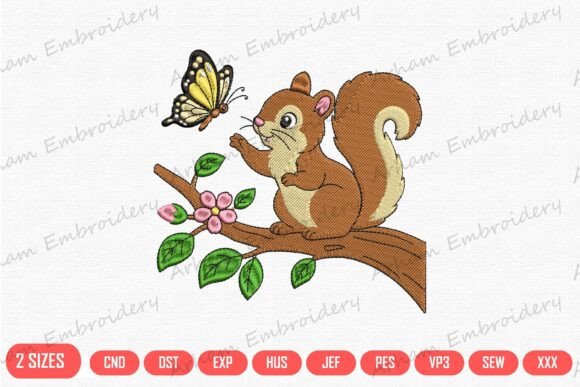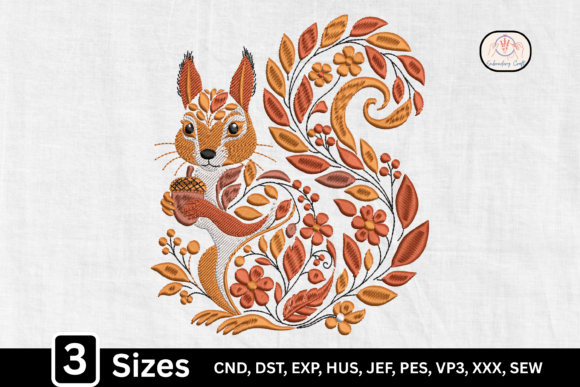
Autumn Forest Woodland Squirrel Design Review
As a professional embroidery designer specializing in commercial merchandise and brand identity, I approach every new machine embroidery design with a critical eye toward production viability. When evaluating the Autumn Forest Woodland Squirrel for small business applications, my primary focus shifts beyond simple aesthetics to technical performance and marketability. This review analyzes how this specific embroidery file translates from a digital concept to a tangible asset for cafes, boutiques, florists, and handmade brands looking to elevate their merchandise.
Visual Personality and Brand Alignment
The first impression of the Autumn Forest Woodland Squirrel is undeniably warm and inviting. For businesses in the cottagecore, nature-inspired, or artisanal sectors, this design communicates an immediate sense of comfort and authenticity. Unlike generic clip art, a well-digitized woodland animal suggests a connection to local environments and seasonal cycles, which resonates deeply with customers seeking genuine handmade product experiences.
From a branding perspective, this design strikes a balance between playful and professional. It avoids being overly juvenile, making it suitable for adult-oriented small business merch. The "autumn forest" theme implies a rich color palette—likely involving russets, golds, deep greens, and browns. These earth tones are excellent for establishing a rustic brand identity that feels established and trustworthy. However, as a designer, I must verify that these thread colors are distinct enough to maintain definition when scaled down for chest logos or sleeve accents. A design that relies too heavily on blending shades can lose its impact on textured fabrics like canvas or denim.
Commercial Applications for Small Businesses
The versatility of the Autumn Forest Woodland Squirrel makes it a strong candidate for various commercial embroidery projects. In my experience working with local businesses, this type of imagery performs exceptionally well across multiple touchpoints:
- Cafe and Bakery Staff Uniforms: Placed on the left chest of an apron or polo, the squirrel acts as a friendly mascot. It softens the uniform's appearance while maintaining a cohesive team look.
- Retail Tote Bag Design: Canvas totes are high-value items for boutiques. This design provides a large, attractive focal point that encourages customers to reuse the bag, effectively turning them into walking advertisements.
- Seasonal Event Merchandise: For autumn festivals, harvest markets, or holiday pop-ups, this design serves as timely, limited-edition branding that drives urgency and sales.
- Product Packaging Accents: Embroidered onto linen pouches or fabric tags, the squirrel elevates the unboxing experience for Etsy sellers and craft vendors.
- Cap Embroidery: The centered composition typical of woodland animals often fits well within the curved constraints of hat fronts, provided the digitizing accounts for the distortion.
For creative studios or florists, using this digital embroidery file on client gifts or thank-you tokens adds a layer of perceived value that printed stickers simply cannot match. The tactile nature of embroidery reinforces the quality of the service provided.
Technical Considerations for Production
While the aesthetic appeal is clear, the technical execution determines whether the Autumn Forest Woodland Squirrel succeeds in a production environment. As an experienced digitizer, I advise checking several critical factors before running bulk orders.
Stitch Density and Fabric Texture
Woodland designs often feature fur texture or leafy details that require careful management of stitch density. If the design is too dense, it can cause puckering on lighter fabrics or break needles on heavy canvas. Conversely, if it is too sparse, the design may look cheap or fail to cover the fabric grain. Always test the embroidery file on the exact material you intend to use. A design that looks perfect on smooth twill might disappear into the weave of a rustic linen apron embroidery project without proper underlay adjustments.
Scaling and Detail Retention
One of the most common issues I encounter with nature-themed designs is poor scalability. Before committing to the Autumn Forest Woodland Squirrel for small patches or sleeve cuffs, verify the minimum recommended size. Intricate details like whiskers, individual leaves, or facial expressions often require simplification when reduced below three inches. If the embroidered patch version loses clarity, consider requesting or creating a simplified "low-detail" variant specifically for small-format applications. Never assume a standard design file will automatically resize without losing integrity.
Hoop Size and Stabilizer Selection
Confirm the hoop size requirements against your machine’s capabilities. Some woodland scenes include sprawling branches or ground elements that extend the design width significantly. Using the correct stabilizer is non-negotiable. For stretchy knits used in staff uniforms, a cutaway stabilizer is essential to prevent distortion. For structured caps or tote bags, a firm tear-away or specialized cap backing ensures crisp registration. Skipping this step is the fastest way to ruin expensive blank merchandise.
Strategic Implementation Notes for Business Owners
To maximize the return on investment for this custom apparel asset, follow these professional guidelines during your sampling phase:
- Run a Black and White Test: Before stitching in full color, run a grayscale or single-color test. This reveals the underlying structure and shading logic of the digitizing. If the design reads well in monochrome, it is structurally sound.
- Create a Printable Mockup: Use software to overlay the design onto photos of your actual products. Share this printable mockup with stakeholders or focus groups before production to gauge visual balance and placement preferences.
- Audit Thread Contrast: Ensure the squirrel stands out against your chosen garment colors. A dark brown squirrel on a navy apron will vanish; you may need to adjust the outline or highlight threads for visibility.
- Verify Commercial Licensing: This is critical. Confirm that the license for the Autumn Forest Woodland Squirrel explicitly permits commercial use on merchandise for sale. Personal-use licenses do not cover branded business assets.
- Compare Beside Existing Assets: Print or stitch the design alongside your current logo and other design assets. Does the style match? Is the stitch weight consistent? Visual consistency builds customer trust and recognition.
- Wash Test for Durability: If the item will be laundered frequently (like uniforms or kitchen linens), wash the sample three times. Check for thread pull-outs, color bleeding, or stabilizer residue. A beautiful design that falls apart after one wash damages your brand reputation.
Evaluating Long-Term Brand Value
Incorporating the Autumn Forest Woodland Squirrel into your product line is more than a seasonal decoration; it is a strategic move to humanize your brand. In an era of mass-produced goods, customers gravitate toward businesses that show personality and craftsmanship. A high-quality finished product featuring this design signals attention to detail and a commitment to aesthetic excellence.
However, success lies in the details. By treating this machine embroidery design as a professional tool rather than just a pretty picture, you ensure it serves your business goals effectively. Whether used as a signature mark on packaging, a staff uniform identifier, or a standalone retail item, the Autumn Forest Woodland Squirrel offers significant potential for engagement and sales—provided it is executed with technical precision and strategic intent. Always prioritize testing and quality control to ensure your commercial embroidery output reflects the premium nature of your brand.